
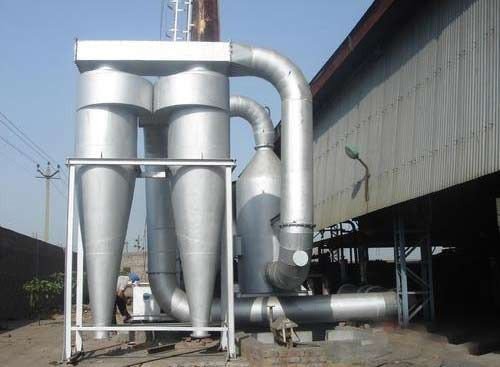
Multi-cyclone dust collectors are efficient systems designed to remove particulate matter from various industrial processes. These systems use multiple cyclone tubes to create high-efficiency separation of particulates from gas streams, reducing the emission of pollutants into the atmosphere.
Different manufacturers provide multi-cyclone dust collector systems for various applications. For example, Babcock & Wilcox offers the Multicyclone dust collector, known for its simple yet efficient design, combining low maintenance, long collecting tube life, and reliable operation. Ducon Environmental Systems also produces high-efficiency multi-cyclones capable of achieving over 99% efficiency for particles 5 microns and larger, making them suitable for applications with light dust loading.
Multi-cyclone dust collectors play a crucial role in industries such as woodworking, metalworking, and food processing, helping to maintain clean air and safe working environments. These systems utilize centrifugal force to separate dust particles from gas streams, providing an effective means of controlling airborne particulate matter.
A cyclone separator utilizes vortex separation to remove particulates from air, gas, or liquid streams. By creating a spinning airflow within the cyclone, heavier particles are thrown to the cyclone’s walls due to centrifugal force and gravity, allowing clean air or gas to exit through the top, while the separated particles are collected at the bottom for disposal. Cyclone separators are commonly used in various industries to manage air pollution control and particulate matter separation.
Cyclonic separators generally achieve high efficiency in removing particulates, with typical efficiencies ranging from 70% to 90%. One key consideration is the gas inlet velocity, which should ideally be in the range of 100 to 150 ft/s for optimal performance. Proper design is crucial for ensuring effective particle removal, with some cyclones capable of removing nearly every particle in the 20- to 30-µm range.
These separators offer advantages such as low maintenance, cost-effectiveness, and the ability to handle a wide range of particle sizes and loads. However, they may have limitations related to pressure drop and re-entrainment of particles. Understanding the factors influencing cyclone performance is important in selecting and optimizing their use for specific applications.