
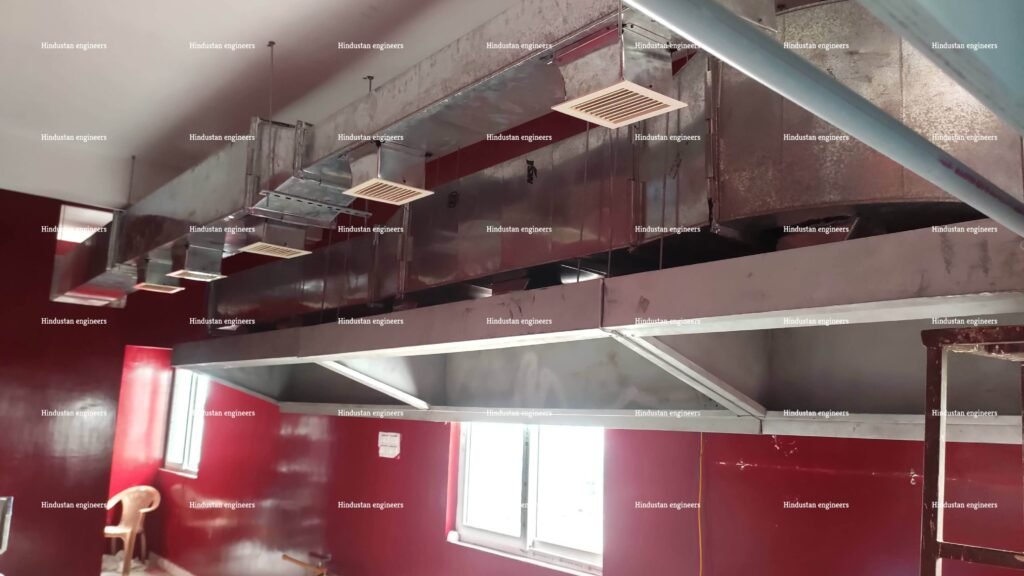
A kitchen exhaust system is the setup that removes smoke, heat, grease-laden vapours, odors, and airborne contaminants from a kitchen—especially in commercial settings. It helps keep the kitchen safe, comfortable, and compliant with fire-safety codes.
Below is a clear breakdown:
Main Components of a Kitchen Exhaust System
1. Exhaust Hood
- Installed above cooking equipment.
- Captures smoke and grease-laden air.
- Types:
- Type I Hood – For grease-producing equipment (grills, fryers, ranges).
- Type II Hood – For heat and steam only (dishwashers, ovens).
2. Grease Filters / Baffles
- Capture grease particles before they enter the duct.
- Must be fire-resistant and easily removable for cleaning.
3. Exhaust Ductwork
- Carries contaminated air from the hood to the outside.
- Must be made of smooth, fire-resistant material.
- Usually requires frequent cleaning to prevent grease buildup.
4. Exhaust Fan / Blower
- Removes air from the kitchen and pushes it outdoors.
- Roof-mount or wall-mount designs are common.
5. Make-Up Air System (MUA)
- Supplies fresh air to replace the air removed.
- Prevents negative pressure, which can cause:
- Backdrafting
- Poor hood performance
- HVAC imbalance
6. Fire Suppression System
- Mandatory in commercial kitchens.
- Automatically extinguishes grease fires in hoods and on appliances.
Types of Kitchen Exhaust Fans
| Type | Typical Use | Pros |
|---|---|---|
| Centrifugal Upblast Fan | Commercial kitchens | Efficient, keeps grease away from building |
| Inline Fan | When space is limited | Quiet, hidden |
| Wall-Mount Fan | Small kitchens | Easier installation |
| Range Hood Blower | Residential homes | Built into hood or remote |
Why Kitchen Exhaust Systems Are Important
- Fire safety: Grease buildup can ignite.
- Air quality: Removes smoke and harmful particulates.
- Comfort: Reduces heat and humidity.
- Regulatory compliance: Required by NFPA 96 and local codes for commercial kitchens.
If you want, I can help you with:
- Choosing a system for a home or commercial kitchen
- Designing a layout
- Installation guidelines
- Maintenance schedules
- Troubleshooting an existing system